Track progress, take quizzes and save notes on this lesson.

Free forever · no card needed

Start free
Intermediate

Sexual and Asexual Reproduction and Meiosis

4.6.1.1 Sexual and asexual reproduction·4.6.1.2 Meiosis·4.6.1.3 Advantages and disadvantages (Biology only)

Aligned to the AQA 8461 specification

Level
Intermediate
Reading time
10 min
Published
16 June 2026
Updated
1 July 2026
On this page
  1. 1.Two Ways Living Things Reproduce
  2. 2.Comparing Sexual and Asexual Reproduction
  3. 3.Meiosis: How Gametes Are Made
  4. 4.Walk-through: One Cell to Four Gametes
  5. 5.Why Sexual Reproduction Produces Variation
  6. 6.Advantages and Disadvantages of Each Method (Biology only)
  7. 7.Common Exam Mistakes

Key takeaways

  • Sexual reproduction involves two parents whose gametes fuse at fertilisation, mixing genetic information so the offspring show variation.
  • Asexual reproduction involves only one parent and uses mitosis with no gametes or fusion, producing offspring that are genetically identical clones of the parent.
  • Meiosis happens in the reproductive organs, halving the chromosome number and producing four genetically different gametes, each with a single set of chromosomes.
  • Fertilisation restores the full chromosome number; in humans a sperm (23) and egg (23) fuse to give a cell with 46 chromosomes, which then divides by mitosis.
  • Variation in sexual reproduction comes from two sources: meiosis makes each gamete genetically different, and fertilisation randomly combines gametes from two parents.

Two Ways Living Things Reproduce

Organisms make new individuals in one of two ways: sexual reproduction and asexual reproduction. The difference comes down to how many parents are involved and whether genetic information gets mixed.

Sexual reproduction involves two parents. Each parent makes special sex cells called gametes, and a male gamete fuses with a female gamete:

  • in animals: a sperm cell fuses with an egg cell
  • in flowering plants: a pollen cell fuses with an egg cell

This fusion is called fertilisation. Because genetic information from two parents is mixed, the offspring are all different from each other and from their parents. This difference is called variation.

Asexual reproduction involves only one parent. There are no gametes and no fusion, so there is no mixing of genetic information. The single parent divides by mitosis to produce offspring that are genetically identical to the parent and to each other. These identical offspring are called clones.

Gamete: a sex cell (sperm, egg, or pollen) that contains only one set of chromosomes and fuses with another gamete during fertilisation.

A key fact links this topic to cell division: meiosis produces cells that are non-identical, whereas mitosis produces cells that are identical. Hold onto that contrast — it explains everything that follows.

Comparing Sexual and Asexual Reproduction

The two methods differ on five clear points. Learn this table — comparison questions are extremely common.

FeatureSexual reproductionAsexual reproduction
Number of parentsTwoOne
Gametes involved?Yes — gametes fuse at fertilisationNo gametes, no fusion
Cell division usedMeiosis (to make gametes), then mitosisMitosis only
Mixing of genetic infoYes — genes from two parents combineNo mixing
OffspringGenetically different (variation)Genetically identical (clones)

Two details students lose marks on:

  • Sexual reproduction is not only about animals. Flowering plants also reproduce sexually, using pollen and egg cells. Do not assume "sexual" means animals only.
  • In asexual reproduction the offspring are clones of the parent, not just identical to each other. Both statements are true, but the comparison to the parent is the one that scores.

Clone: an organism that is genetically identical to its parent. Asexual reproduction always produces clones because only mitosis is involved.

Meiosis: How Gametes Are Made

Gametes are not made by ordinary cell division. They are made by meiosis, which happens only in the reproductive organs (such as the testes, ovaries, and the parts of a flower that make pollen and egg cells).

Meiosis does two jobs:

  1. It halves the number of chromosomes, so each gamete carries a single set.
  2. It produces four gametes that are all genetically different from each other.

The reason for halving is simple arithmetic. If gametes kept the full number of chromosomes, fertilisation would double the number every generation. Halving in the gametes means fertilisation can restore the full number without it ever building up.

AQA does not require you to know the named stages of meiosis. You must be able to explain what meiosis achieves: it halves the chromosome number and makes four genetically different gametes.

A useful pair of terms (helpful but worth knowing):

(Extra context — the words diploid (full number, two sets) and haploid (half number, one set) are not required vocabulary in AQA 8461, but they make the chromosome-counting easier to describe.)

A normal body cell has two full sets of chromosomes (diploid). A gamete has one set (haploid). Fertilisation joins two haploid gametes back into one diploid cell.

Walk-through: One Cell to Four Gametes

Here is meiosis traced from a single starting cell, using the human chromosome number as the worked example.

A human body cell contains 46 chromosomes (arranged as 23 pairs). Follow what meiosis does to it:
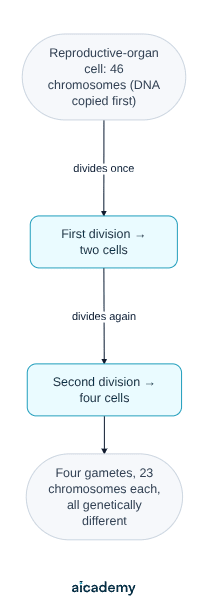
So one diploid cell of 46 chromosomes becomes four haploid gametes of 23 chromosomes each. The halving is the headline: .

Now follow fertilisation, which reverses the halving:
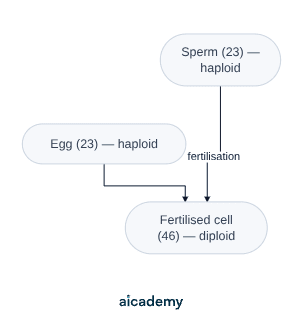
, the normal diploid number. After fertilisation, the new cell divides by mitosis to increase the number of cells, and as the embryo grows those cells differentiate into specialised types.

Watch the two divisions. Meiosis is "divide, then divide again" — that is why it makes four cells, not two. Mitosis is a single division making two identical cells.

How much of this have you taken in?

Quiz yourself on this section, free, no card needed.

Test myself

Why Sexual Reproduction Produces Variation

Variation is the headline advantage of sexual reproduction, and exam questions often ask you to explain where it comes from. There are two sources.

Source 1 — meiosis makes the gametes different. When meiosis shuffles the chromosomes into gametes, every gamete ends up with a different combination of genetic information. That is why the four gametes from one cell are all genetically different rather than identical copies.

Source 2 — fertilisation is random. Any one of the male gametes could fuse with any one of the female gametes. The particular combination of genes in the offspring depends on which two gametes happen to meet.

Put the two sources together:
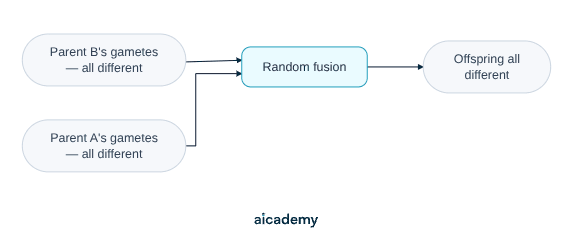
Because the genetic information comes from two parents and is mixed in this way, no two offspring (apart from identical twins) are genetically the same.

Contrast this with asexual reproduction: only mitosis is used, no gametes fuse, and no genetic information is mixed. The result is zero genetic variation — every offspring is a clone of the parent.

Advantages and Disadvantages of Each Method (Biology only)

The whole of this slide is AQA spec section 4.6.1.3, which is Biology only (not on the Combined Science / Trilogy course).

Neither method is "better" overall — each suits different circumstances.

Sexual reproduction — advantages:

  • Produces variation in the offspring.
  • If the environment changes, variation gives some offspring a survival advantage through natural selection — at least some are likely to have features that help them survive.
  • Humans can speed up natural selection through selective breeding, for example to increase food production from crops and livestock.
  • Disadvantage: it is slower and needs two parents to find each other and mate, which costs time and energy.

Asexual reproduction — advantages:

  • Only one parent is needed.
  • It is more time- and energy-efficient because there is no need to find a mate.
  • It is faster than sexual reproduction.
  • Many identical offspring can be produced quickly when conditions are favourable.
  • Disadvantage: there is no variation, so if the environment changes the whole population may be poorly suited to it.

Some organisms use both methods depending on circumstances:

OrganismAsexualSexual
Malarial parasitein the human hostin the mosquito
Many fungiby sporesto produce variation
Many plants (e.g. strawberry, daffodil)by runners or bulb divisionby producing seeds

You may be asked to explain the advantages and disadvantages for any organism, given information about it. Apply the same logic: variation and survival in changing conditions favour sexual; speed and a single parent in stable conditions favour asexual.

Common Exam Mistakes

1. Saying meiosis makes two cells

Meiosis involves two divisions and makes four gametes. Mitosis makes two identical cells. Mixing these up is one of the most common errors in this topic.

2. Confusing meiosis and mitosis

Use this contrast to keep them apart:

FeatureMeiosisMitosis
Number of divisionsTwoOne
Cells producedFourTwo
Chromosome numberHalved (one set per gamete)Kept the same (full set)
Cells identical?No — all genetically differentYes — genetically identical
Where / what forReproductive organs, makes gametesGrowth, repair, asexual reproduction

3. Forgetting that fertilisation restores the number

Halving in meiosis and doubling at fertilisation work as a pair. State both: gametes are halved by meiosis, and fertilisation restores the full diploid number ( in humans).

4. Claiming asexual reproduction produces variation

Asexual reproduction uses mitosis only, so there is no mixing of genetic information and no variation. The offspring are clones. Variation comes only from sexual reproduction.

5. Treating sexual reproduction as animals only

Flowering plants reproduce sexually too, with pollen and egg cells. The phrase "sperm and egg" applies to animals; in plants it is "pollen and egg".

6. Listing facts instead of explaining variation

If a question asks why sexual reproduction causes variation, name both sources: meiosis makes each gamete genetically different, and fertilisation randomly combines gametes from two parents.

Key terms

Sexual reproduction
Reproduction involving two parents whose gametes fuse at fertilisation, mixing genetic information and producing variation.
Asexual reproduction
Reproduction involving one parent using mitosis only, with no gametes or fusion, producing genetically identical clones.
Gamete
A sex cell (sperm, egg, or pollen) that contains only one set of chromosomes and fuses with another gamete during fertilisation.
Fertilisation
The fusion of a male gamete with a female gamete, which restores the full chromosome number.
Meiosis
Cell division in the reproductive organs that halves the chromosome number and produces four genetically different gametes.
Clone
An organism that is genetically identical to its parent, produced by asexual reproduction.
Variation
Genetic difference between offspring, produced by sexual reproduction through meiosis and random fertilisation.

Frequently asked questions

Sexual reproduction involves two parents whose gametes fuse at fertilisation, mixing genetic information so offspring are genetically different (variation). Asexual reproduction involves one parent and uses mitosis only, with no gametes or fusion, so offspring are genetically identical clones of the parent.

Meiosis happens in the reproductive organs and does two jobs: it halves the number of chromosomes so each gamete carries a single set, and it produces four gametes that are all genetically different from each other. Fertilisation then restores the full chromosome number.

Variation comes from two sources. First, meiosis shuffles the chromosomes so every gamete ends up genetically different. Second, fertilisation is random, so any male gamete could fuse with any female gamete. Because the genes come from two parents and are mixed this way, no two offspring are genetically the same.

Generate revision on any topic you study

Type any topic you're studying and Aicademy generates a complete lesson, quiz, and flashcard set, personalised to your level.

Lessons on anything

Structured, level-matched lessons on any topic you study

Practice quizzes

Find out what you actually know before the exam does

Flashcard sets

Lock in key concepts with instant revision cards

Ask Aica

Stuck on something? Get a clear explanation, any time

Prev

Contraception and Fertility Treatments

Next

DNA, the Genome and Protein Synthesis

Related lessons

8 min

Lesson

Mitosis and the Cell Cycle

AQA GCSE Biology · AQA 8461

1 month ago

Top students don’t revise more. They revise what counts.

Start revising free

Free to start. No card needed.