Staff-guided AI revision for pupils
Aicademy helps pupils turn approved topics and study materials into lessons, quizzes, flashcards, and learning paths — starting with a small trial your school defines and reviews.
The first step is a 15-minute conversation — no commitment.
Designed for revision, not shortcuts
Designed for
- Revision and understanding from approved topics or materials
- Structured study materials pupils learn from — not answers to copy
- A small, staff-guided trial that the school defines, reviews, and can stop
- Testing whether Aicademy supports real revision before committing to anything
Out of scope
- Producing assessed coursework or submitting AI-written work as a pupil's own
- Replacing teacher feedback, classroom instruction, or safeguarding processes
- Entering names, addresses, student IDs, or sensitive school/personal data
- Promising grade improvement — the trial measures use, fit, and staff feedback
Most school conversations about AI start with a reasonable concern: pupils using generative tools to produce work that is not their own.
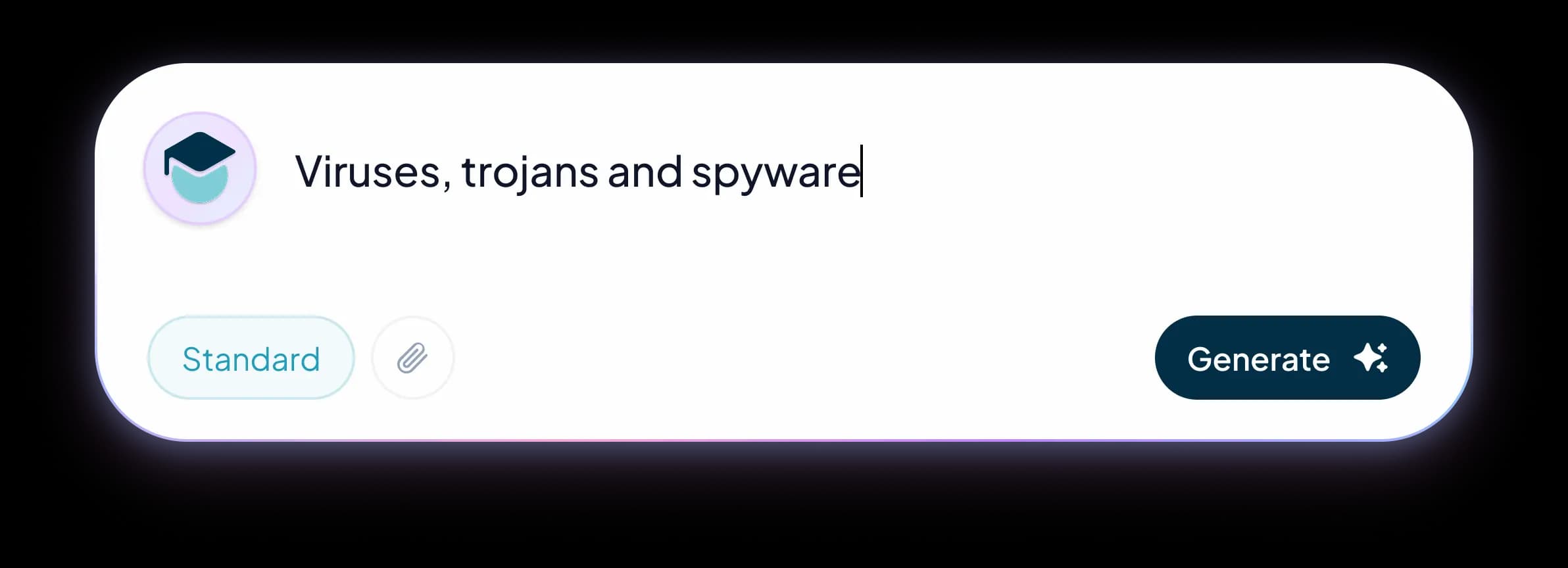
Aicademy is built for a different use case. Pupils start with an approved topic, class notes, or study material, then turn it into a structured lesson, quiz, and flashcards for revision.
The trial is designed to test whether pupils use that workflow responsibly, whether staff see value in it, and what controls would be needed before anything wider is considered.
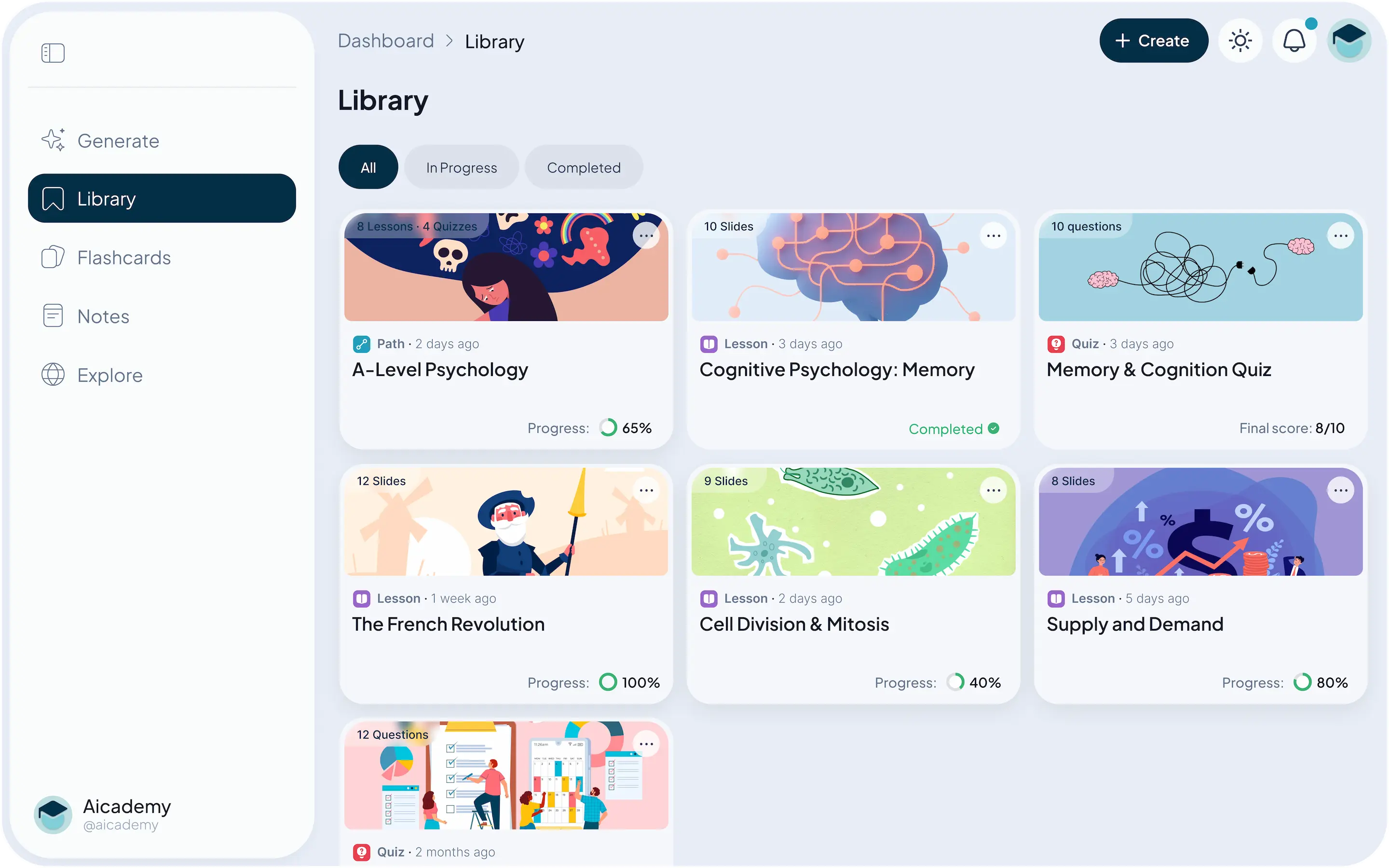
A 6-week school trial
One cohort, subject, or support groupScope it together
Choose one cohort, subject, or support group. Agree the topics, materials, and usage rules before pupils start.
Run the trial
Pupils use Aicademy for revision and understanding. Staff can review examples through normal check-ins or pupil-shared work.
Review what happened
Look at pupil feedback, staff observations, and practical questions. The school decides whether anything wider is worth exploring.
What the trial needs from your school
- One staff contact to define the scope and review the trial
- One cohort, support group, or year group
- Approved topics or study materials for pupils to use
- Simple usage rules to share before pupils start
- A short review conversation after six weeks
How pupils use Aicademy
Start with approved study material
A topic, class notes, a specification section, a revision worksheet, or an uploaded study document. Pupils start from what they are already meant to learn.
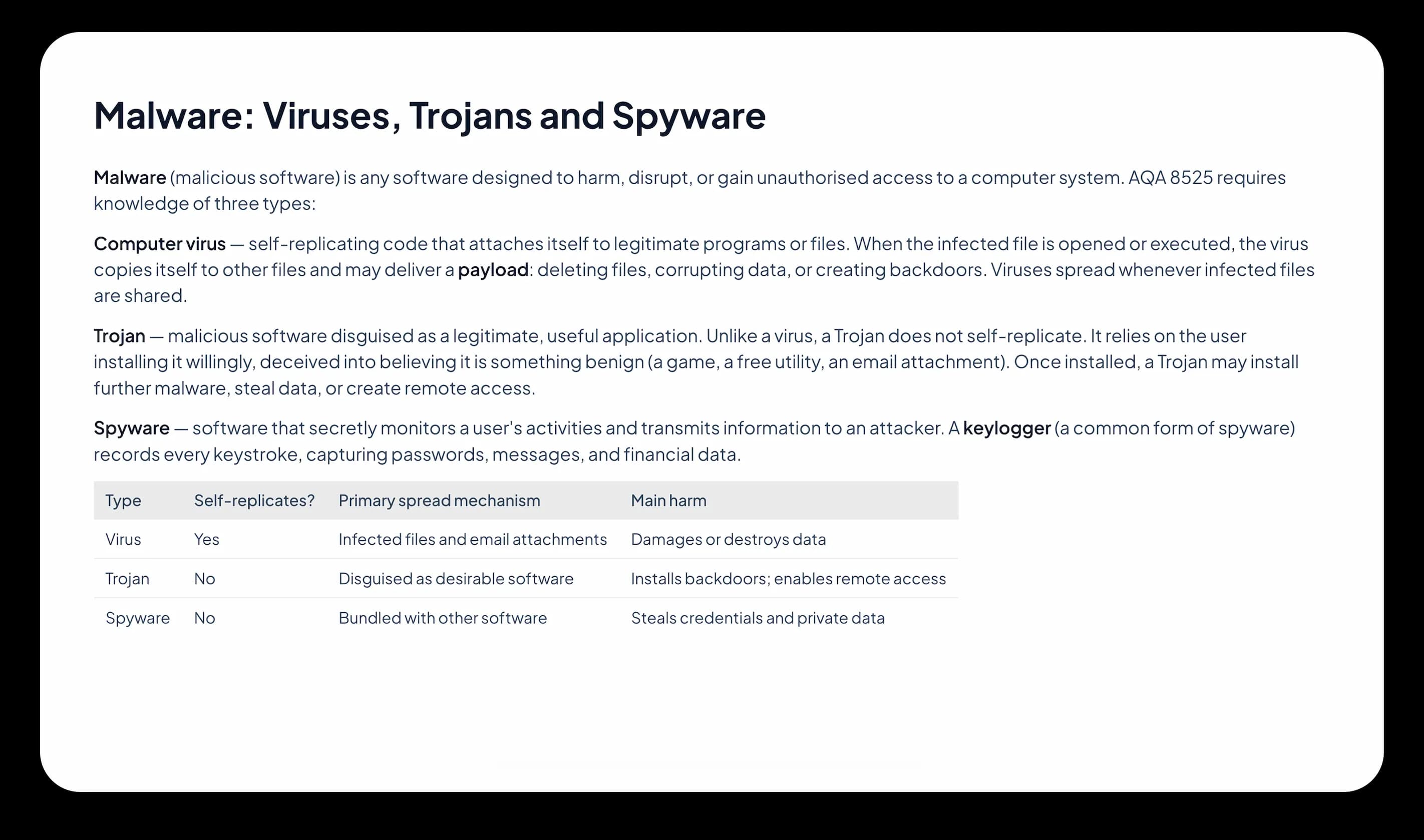
Build a structured lesson
Aicademy breaks the material into clear sections, such as key ideas, examples, and summaries. The explanation style can adapt to the pupil's learning profile.
Practise with quizzes and flashcards
Quizzes and flashcards are generated from the lesson content, not a generic question bank. Harder flashcards come back sooner so pupils can revisit what they miss.
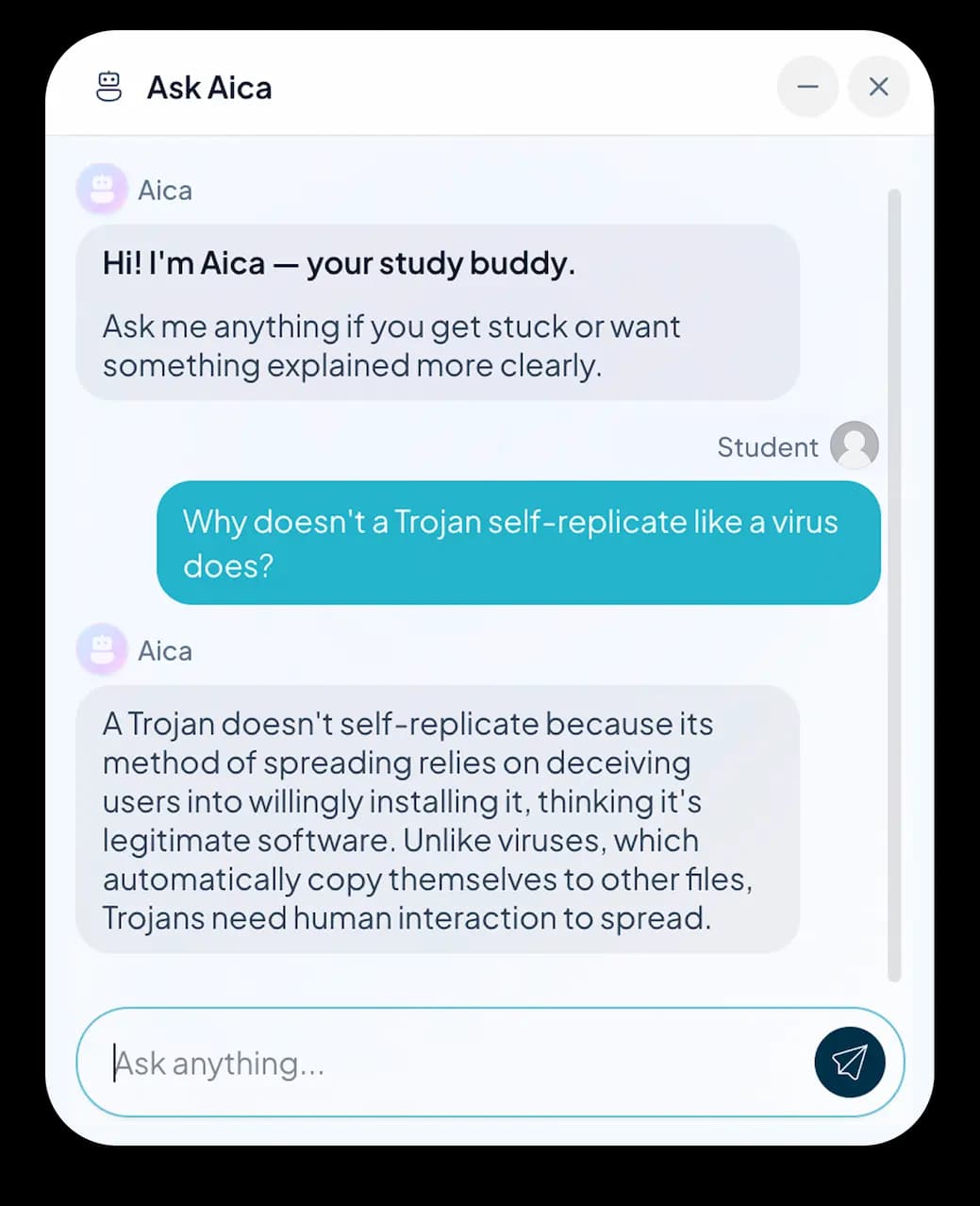
Ask Aica when stuck
Aica is the built-in AI tutor. It explains concepts using context from the lesson being studied. It explains differently — it does not produce work for submission.
Where Aicademy fits
Aicademy works best when pupils already have content to learn, but need structure, practice, or a clearer explanation.
Data and privacy
Any school trial should go through the school's normal IT, data, and safeguarding review. Aicademy is not the consumer ChatGPT product, and the key data details are set out clearly before any trial is agreed.
- AI features use Azure OpenAI — Microsoft's enterprise AI service, not the consumer ChatGPT product.
- Microsoft's Azure OpenAI documentation states that prompts, responses, and customer data are not used to train foundation models or shared with OpenAI.
- AI processing happens in Sweden Central (EEA). Application data is stored in Supabase/PostgreSQL hosted on AWS EU West 2 (London, UK).
- Uploaded study files are parsed for text and are not permanently stored. Extracted study content may be saved to the user's account.
- Study content is private by default unless a user chooses to share or publish it. Personal data is not sold.
- Relevant documentation is available to support a school's IT or data review before any trial is agreed.
Aicademy was built and evaluated as the final-year project of a First-Class Computer Science degree, with two rounds of anonymised user testing involving 18 participants in total.
Feedback was strongest around ease of use, usefulness, and the connected revision workflow — lessons, quizzes, flashcards, notes, and tutoring working together rather than as separate tools.
That is useful early evidence, not proof of school-scale impact or grade improvement. A school trial would test what actually matters in context: whether pupils use it responsibly, whether staff find it practical and useful, and what controls would be needed before anything wider is considered.
Early testing was positive. A school trial would test real use.
Ready for a small trial
The core revision workflow is live now. School-specific controls can be shaped from what a first trial shows.
- Topic and document-based study material generation
- Lessons, quizzes, flashcards, notes, and learning paths
- Aica, the built-in tutor for lesson-specific explanations
- Personal learning profiles for explanation style and study context
- Private study content by default, unless a user chooses to share it
- Sign-in with a Microsoft work or school account, or Google
- Reduced-motion and high-contrast display modes for accessibility
- Public privacy policy, terms of use, and AI/data information
Shaped with early schools
These are school-specific features to shape from real trial feedback, rather than assumptions made in advance.
- Teacher-facing trial guide and onboarding materials
- Usage templates and classroom guidance
- Cohort-level activity reporting
- Admin controls for managed school use
- School-specific data and safeguarding review materials
Early schools are not being asked to commit to a school-wide rollout. The aim is to test a small revision workflow first, then use what the trial shows to shape any school-specific features.
Built from the experience of needing things explained differently.
I'm Diba Malikzadeh. I built Aicademy after seeing a common problem with AI study tools: they can explain almost anything, but they do not always help students turn that explanation into a structured revision process.
Aicademy is a live platform, not a static prototype. It turns topics or study material into lessons, quizzes, flashcards, notes, and learning paths, with Aica available to explain concepts in a different way when a pupil gets stuck.
I am looking for early schools to help test what responsible AI revision looks like in practice, starting with a small, staff-defined trial before any wider rollout is considered.
Get in touch schools@useaicademy.com
Questions schools ask first
Aicademy should not be used to produce assessed coursework, homework answers, or anything a pupil is expected to submit as their own work. The recommended school trial is for revision, independent study, catch-up, and study skills. If pupils use it outside lessons, the boundary should still be clear: Aicademy helps them understand and practise material, not complete work for submission.
No. Aicademy gives pupils a structured place to revise, practise, and ask for another explanation when something has not clicked. Teachers still decide what material is appropriate, what good learning looks like, and where AI should or should not be used. Aicademy supports revision; it does not replace classroom teaching, teacher judgement, or pastoral understanding.
Aicademy is a revision tool, not a messaging platform. There is no direct messaging between pupils. A school trial should be scoped to approved study topics, with clear rules telling pupils not to enter names, addresses, student IDs, or sensitive personal information. Aicademy does not currently provide built-in safeguarding monitoring, which is why any school use should start with a small, staff-defined trial.
No school-wide licence is needed to start a conversation. The right first step is a small trial with agreed scope, usage rules, and review criteria. A paid arrangement would only be discussed if the trial shows enough value for the school to consider wider use.
One staff contact, one cohort or support group, agreed topics or study materials, simple written usage rules for pupils, and a short review at the end. The first step is a 15-minute conversation to check whether Aicademy is appropriate for the school’s use case before anything is agreed.
For general product questions, see the full FAQ. For data-specific details, see AI and data.
Try it yourself before deciding anything.
Create an account and run a topic through Aicademy — the quickest way to understand what pupils would actually be doing.
Lessons on anything
Structured, level-matched lessons on any topic you study
Practice quizzes
Find out what you actually know before the exam does
Flashcard sets
Lock in key concepts with instant revision cards
Ask Aica
Stuck on something? Get a clear explanation, any time