Guide
Is ChatGPT good for studying?
An honest look at where ChatGPT genuinely helps you learn, where it quietly sets you back, and how to use it without getting worse at the subject.

Founder, Aicademy
7 min read
ChatGPT is now the first place millions of students go when they are stuck, and the honest answer to “is it good for studying?” is: yes, for some things, and quietly risky for others. It is a superb explainer and a terrible substitute for actually testing yourself, and the students who get the most from it are the ones who know the difference.
This is a balanced look at both sides: where it genuinely helps, where the evidence says it can set you back, whether it counts as cheating, and how to use it so it makes you better at a subject rather than more dependent on it.
Where ChatGPT genuinely helps
Used as a patient explainer, it is excellent. It will explain the same idea five different ways until one lands, answer the follow-up question you would be too embarrassed to ask a teacher, and break a hard topic into steps. Its Study Mode goes further by guiding you with questions rather than just handing over the answer, which nudges you towards thinking instead of copying.
- Explaining and re-explaining a concept at your level.
- Generating practice questions to test yourself with.
- Checking your reasoning after you have attempted something yourself.
- Summarising or simplifying a dense passage so you can get a foothold.
Where it can backfire
The risks are real and worth taking seriously. There are two big ones.
It can do the thinking for you. The effort of recalling and working things out is what builds memory. If you use ChatGPT to produce answers you then copy down, you skip that effort, and studies have found students who lean on AI this way can do worse when later tested without it. The tool feels like learning while quietly replacing it.
It can be confidently wrong. Large language models hallucinate: they sometimes state incorrect facts in fluent, convincing language, and ChatGPT is not aligned to any specific UK exam board. For maths steps, scientific detail and precise dates, it can mislead you without any signal that it has. It also does not remember your syllabus: each chat starts fresh, nothing is saved as a reusable lesson, and there is no spaced-repetition review behind anything it writes.
Is it cheating to study with ChatGPT?
It depends entirely on what you use it for. Asking it to explain photosynthesis, quiz you, or check your essay plan is a study aid, no different in principle from asking a tutor. Pasting its output into coursework and handing it in as your own is cheating, and most schools and exam boards treat that as academic misconduct. A good test: are you using it to understand the work, or to avoid doing it? The first is fine; the second is both against the rules and self-defeating.
How to use it well
- Attempt first, then check. Try the problem, then ask ChatGPT where you went wrong. Do not ask for the answer before you have struggled.
- Ask it to quiz you, not to tell you. Turn it into a question machine, then answer from memory.
- Cross-check anything important against your notes, textbook or exam-board materials.
- Never submit its words as your own. Use it to learn, then write the work yourself.
- Move understanding into retention. Once it has explained something, test yourself on it with flashcards and spaced repetition, or it will fade.
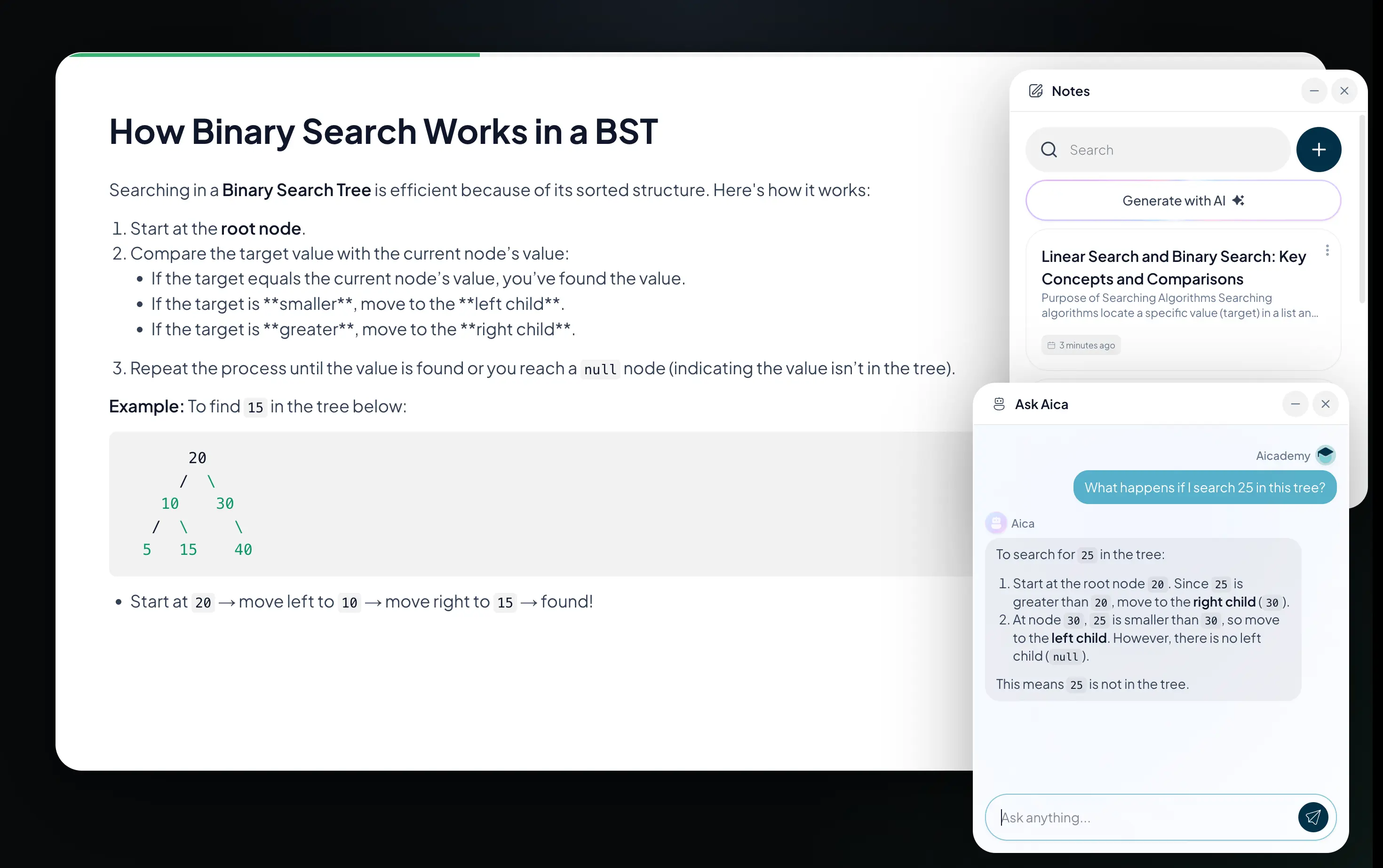
This is the gap Aicademy is built to fill: it uses the same kind of AI to explain, but wraps it in a saved study system with quizzes, spaced-repetition flashcards and progress tracking, built for UK exam boards. We lay out the differences in full in Aicademy vs ChatGPT — and yes, Aicademy is ours, so factor that in. For how it stacks up against other tutors, see the best AI tutors for GCSE & A-level. If you want the wider landscape first, see the best AI study tools for 2026.
Frequently asked questions
For explaining concepts, answering follow-up questions and getting unstuck, ChatGPT is genuinely useful, and its Study Mode guides you with questions rather than just giving answers. Where it is weaker is retention: it does not save reusable lessons, schedule spaced-repetition review, or track your progress across a syllabus, and it can state wrong things confidently. Use it to understand, then test yourself elsewhere.
Using it to explain a concept, quiz yourself, or plan revision is a study aid, no different in principle from a tutor or a textbook. Copying its output into work you hand in as your own is cheating, and most schools treat it as academic misconduct. The line is whether you are using it to learn or to avoid learning.
It can, if you let it do the thinking for you. Studies have found that students who lean on AI to produce answers can perform worse when later tested without it, because they skipped the effortful recall that builds memory. The risk is not the tool; it is using it to skip the struggle that actually teaches you.
Mostly, but not blindly. It can hallucinate, meaning state incorrect facts confidently, and it is not aligned to any specific exam board. Treat it as a well-read study partner, not a textbook: cross-check anything important against your notes, a textbook, or exam-board materials, especially for maths, sciences and dates.
It is reliable for explaining concepts and generating practice, but not as a source of truth. Because it can hallucinate and is not tied to any exam board, it can be confidently wrong on specific facts, maths steps and dates. Treat it as a smart study partner you fact-check, not a textbook, and it is reliable enough. Lean on it as your only source, and it is not.
Study Mode, launched in 2025 and available on the free tier, makes ChatGPT teach with guiding questions and hints instead of handing over answers. It is a set of instructions layered on the normal model rather than a separate product, so it does not save lessons or schedule revision; progress lives inside the conversation.
Use it to explain things in different ways, to generate practice questions, and to check your reasoning after you have attempted something. Avoid using it to write answers you then copy. Pair it with a system that makes you retrieve and review: understand with ChatGPT, then test yourself with flashcards and past papers.
Sources
- OpenAI — introducing Study Mode (openai.com)
- The Hechinger Report — journalism on AI and learning outcomes in education
- OpenAI — ChatGPT pricing (openai.com)
Prices and features were checked as of the date shown and can change. Where a figure could not be confirmed from a primary source, we say so in the text.
Founder, Aicademy
Diba is the founder of Aicademy and a first-class Computer Science graduate from the University of Birmingham. She writes about AI in education and how students actually learn.
Disclosure: Aicademy is the study app made by the team that publishes this blog. We compare it fairly against other tools and cite our sources so you can check everything yourself.
Keep reading
Aicademy vs ChatGPT for studying
ChatGPT is a smarter chat; Aicademy is a study system that saves your lessons, schedules revision and tracks progress. Compared.
The 10 best AI study tools for students in 2026
The AI study tools worth your time in 2026, from tutors to flashcard makers, compared on what each is best at and what it costs.
How to make flashcards that actually work
Why most flashcards don't work, how to write ones that do, and how spaced repetition turns them into long-term memory.
Study with more than flashcards
Aicademy generates personalised lessons, quizzes and flashcards from any topic or your own notes, with spaced-repetition revision and an AI tutor.
Lessons on anything
Structured, level-matched lessons on any topic you study
Practice quizzes
Find out what you actually know before the exam does
Flashcard sets
Lock in key concepts with instant revision cards
Ask Aica
Stuck on something? Get a clear explanation, any time
Upgrade to Pro whenever you're ready