Guide
How to revise for GCSE Computer Science (OCR J277)
GCSE Computer Science rewards exam technique as much as knowledge. Here is how to revise both papers, the topics that lose marks, and a plan that works.

GCSE & A-level tutor, Aicademy contributor
9 min read
GCSE Computer Science trips up students who revise it like a knowledge subject, because only half of it is knowledge. Paper 1 rewards recall, but Paper 2 rewards something re-reading can never build: the ability to read, write and trace algorithms under time pressure. Get the balance right and it is one of the most score-able GCSEs, because so much of it is practisable rather than memorisable.
This guide is written around OCR’s J277 specification, the most widely taught GCSE Computer Science course, though the method applies to AQA and other boards too. It covers what each paper tests, the exact topics students lose marks on, the exam technique examiners reward, and a weekly plan you can start this week.
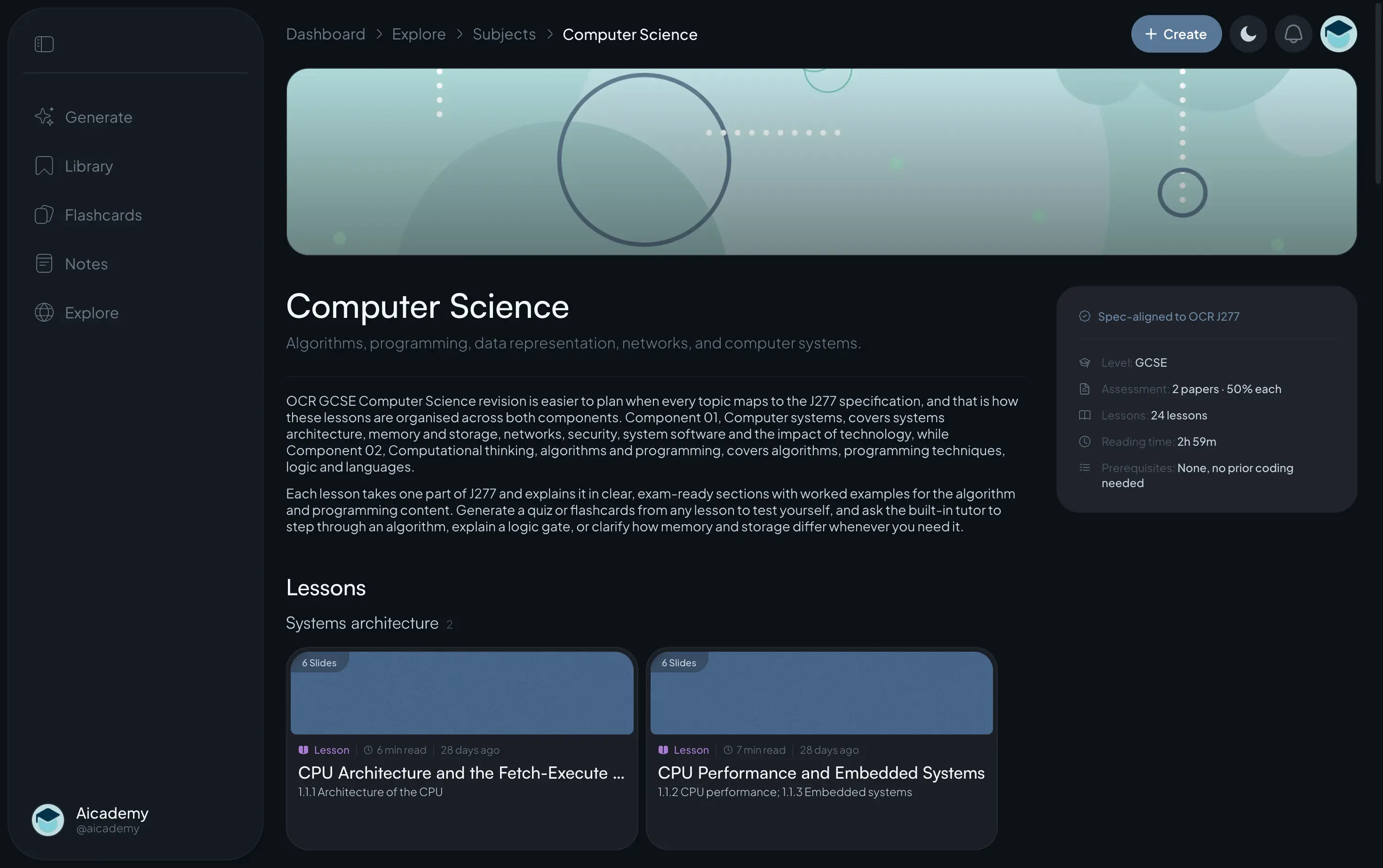
What J277 actually tests
The course is two equally weighted exams, each 1 hour 30 minutes and 80 marks. Knowing which paper a topic belongs to tells you how to revise it.
- Paper 1 — Computer Systems. Systems architecture (the CPU and the fetch-decode-execute cycle), memory and storage, networks and protocols, network security, systems software, and the ethical, legal, cultural and environmental impacts of technology. This is mostly recall and explanation.
- Paper 2 — Computational Thinking, Algorithms and Programming. Algorithms (searching and sorting), programming fundamentals, producing robust programs, Boolean logic, and programming languages. This is mostly applied: writing, correcting and tracing code.
The single most useful thing you can do early is sort every topic into “recall” or “apply”, because they need completely different revision.
The topics that lose the most marks
After years of marking mock papers, the same handful of topics come up again and again as the ones that decide grades. Prioritise these.
The fetch-decode-execute cycle and CPU components. Students learn the words but cannot explain the cycle as a sequence or say what the ALU, control unit, cache and registers each do. Learn it as a story: the CPU fetches an instruction from memory, decodes it, then executes it, and repeats. Be able to explain how clock speed, cores and cache each affect performance.
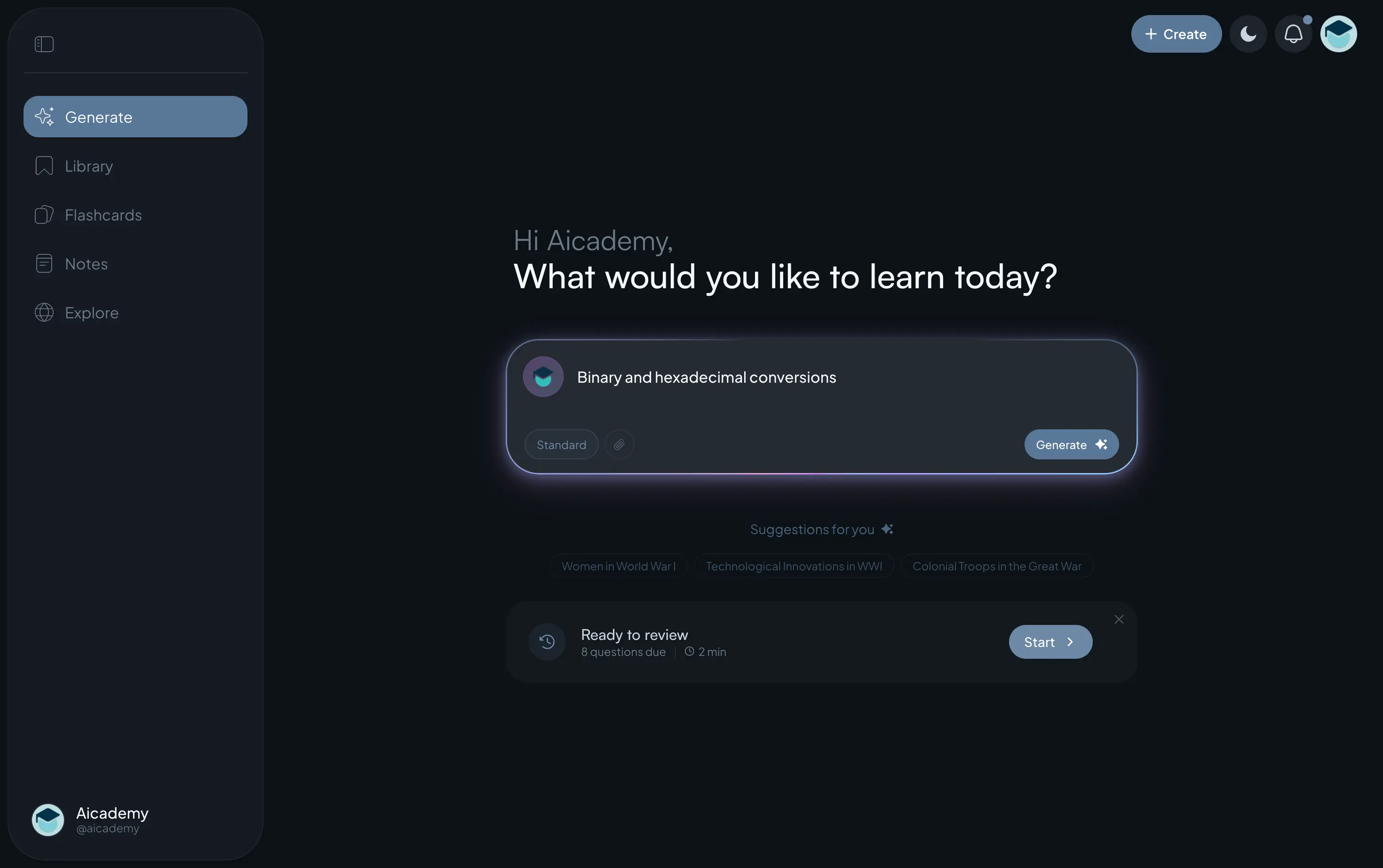
Data representation: binary and hexadecimal. Binary to denary, denary to binary, binary addition, binary shifts, and binary to hex conversions. These are pure practice: do five of each a day for a fortnight and they stop being scary. Always show your working, because method marks are available even if the final number is wrong.
Networks and protocols. LANs versus WANs, star and mesh topologies, wired versus wireless, and what each protocol is for (TCP/IP, HTTP and HTTPS, FTP, and the email protocols). Make a one-line “what it does” card for each protocol, this is classic recall you can bank with flashcards.
Algorithms: searching and sorting. You must be able to describe and trace linear and binary search, and bubble, merge and insertion sort. Do not just memorise them, trace each one by hand on a small list until you can predict every step. Examiners love asking you to trace an algorithm with a table.
Programming and trace tables. Reading code and working out its output is worth a lot of marks and is very learnable. Practise building trace tables for loops and conditions, and practise writing short algorithms in OCR’s Exam Reference Language or a high-level language. Neat, logical pseudocode earns marks even if it is not perfect.
Boolean logic. AND, OR and NOT, truth tables and logic diagrams. A small, self-contained topic that is easy marks once you have drilled a few truth tables.
Nail the exam command words
A huge number of marks are lost not to missing knowledge but to answering the wrong question. Before you write anything, underline the command word:
- State / give / identify — a short fact, no explanation needed. Do not waste time writing a paragraph.
- Describe — say what something is or does.
- Explain — say how or why, usually with a “because”. If you only describe, you cap your marks.
- Discuss / the 8-markers — the extended-response questions, often on ethical, legal, cultural or environmental impacts. Examiners want a balanced argument with points on more than one side and a short conclusion, not a one-sided list.
Match the number of points you make to the marks available: a 4-mark question wants roughly four distinct creditable points.
The method that actually works
The evidence on revision is boringly consistent: re-reading and highlighting feel productive but barely move the needle. Two things do, and they map neatly onto the two papers.
- Active recall for Paper 1. Close the notes and test yourself on definitions and processes. Flashcards are ideal for protocols, CPU components and network terms. How to make flashcards that work covers writing good ones.
- Spaced repetition so topics you learned in autumn do not evaporate by summer. Short, frequent reviews beat one long session. Here is why it works.
- Past papers for Paper 2. Nothing else builds the applied speed you need. Do them timed, then mark them against the official mark scheme so you learn what earns marks, not just whether you were roughly right.
A weekly plan you can start now
A realistic week for a student revising alongside other subjects:
- Daily (10 minutes): five binary or hex conversions, and one small algorithm traced by hand. This is the habit that wins Paper 2.
- Two or three short recall sessions: flashcards on a Paper 1 topic (networks one day, systems architecture the next), reviewing older decks as they come due.
- One longer session: a timed past-paper section, then mark it and write down the two topics you were weakest on.
- Feed the weak topics back in: next week’s flashcards and practice come from exactly what you got wrong.
Resources
Work from the official OCR J277 specification and past papers so you are revising the right detail, and use free GCSE revision sites for notes and questions. Our own GCSE Computer Science lessons break the tricky topics like the fetch-decode-execute cycle into short, testable chunks.
If you want practice built around your specific weak spots, Aicademy can generate a lesson, a quiz and spaced-repetition flashcards on any J277 topic, so if binary shifts or trace tables keep catching you out, you can drill exactly those. It is free to start.
Frequently asked questions
Split it into the two things the exam tests: recalling theory and applying it. For theory, use active recall and spaced repetition rather than re-reading, testing yourself on definitions and processes like the fetch-decode-execute cycle. For application, do timed past-paper questions, write and trace algorithms by hand, and mark your answers against the mark scheme so you learn what earns the marks.
Most students find data representation (binary and hexadecimal conversions, binary addition and shifts) and algorithms (searching, sorting and writing pseudocode) the hardest, because they need to be applied under time pressure rather than just remembered. The good news is they are the most practisable: do a few conversions and a trace table every day and they become almost automatic.
Paper 1, Computer Systems, covers systems architecture, memory and storage, networks, network security, systems software, and the ethical, legal and environmental impacts of technology. Paper 2, Computational Thinking, Algorithms and Programming, covers algorithms, programming fundamentals, producing robust programs, Boolean logic, and programming languages. Each paper is 1 hour 30 minutes, 80 marks, and worth 50%.
Yes. Paper 2 assesses programming on paper: you will read, correct and write algorithms using OCR's Exam Reference Language or a high-level language, and trace what code does. You do not submit coursework, but you cannot revise programming just by reading, you have to write and trace code by hand until it is second nature.
Start light retrieval and past-paper practice at least six to eight weeks out, and ideally keep a little going all year with spaced repetition. Computer Science rewards consistent short practice over cramming, because the applied skills like binary conversions and tracing code only become fast with repetition.
Describe means say what something is or does; explain means say how or why it has an effect, usually with a because. A lot of marks are lost by describing when the question said explain. Underline the command word before you answer and make sure your response does what it asks.
Sources
- OCR — GCSE (9–1) Computer Science J277 specification (ocr.org.uk)
- OCR — J277 past papers and assessment materials (ocr.org.uk)
- Education Endowment Foundation — evidence on retrieval practice and spaced learning (educationendowmentfoundation.org.uk)
Prices and features were checked as of the date shown and can change. Where a figure could not be confirmed from a primary source, we say so in the text.
GCSE & A-level tutor, Aicademy contributor
Liba is a first-class Computer Science graduate from the University of Birmingham who tutors GCSE and A-level students. She writes about revision technique and exam prep.
Disclosure: Aicademy is the study app made by the team that publishes this blog. We compare it fairly against other tools and cite our sources so you can check everything yourself.
Keep reading
How to revise for GCSEs: a method that actually works
Evidence-based GCSE revision: retrieval practice, spaced repetition and past papers, turned into a simple weekly plan that actually sticks.
Active recall and spaced repetition: the study methods that actually work
Why re-reading fails, and how active recall and spaced repetition — the two most evidence-backed study methods — turn revision into long-term memory.
The 8 best free GCSE revision websites and apps
The best genuinely free GCSE revision websites and apps in 2026, what each is best for, and where the free tier quietly ends.
Study with more than flashcards
Aicademy generates personalised lessons, quizzes and flashcards from any topic or your own notes, with spaced-repetition revision and an AI tutor.
Lessons on anything
Structured, level-matched lessons on any topic you study
Practice quizzes
Find out what you actually know before the exam does
Flashcard sets
Lock in key concepts with instant revision cards
Ask Aica
Stuck on something? Get a clear explanation, any time
Upgrade to Pro whenever you're ready