Guide
Active recall and spaced repetition: the study methods that actually work
Re-reading and highlighting feel productive but barely move the needle. These are the two techniques the evidence actually backs, and how to use them.
GCSE & A-level tutor, Aicademy contributor
8 min read
Most revision time goes on methods that feel productive and barely work. You re-read the chapter, highlight the important bits, copy your notes out neatly — and walk away feeling like you have studied, right up until the moment in the exam when none of it comes back.
Decades of research keep landing on the same two techniques as the ones that genuinely move the needle: active recall and spaced repetition. They are less comfortable than re-reading, which is a large part of why they work. This guide covers what each one is, why it works, and how to build both into your revision without overhauling your whole routine.
Why re-reading and highlighting fail
In one of the largest reviews of study techniques, Dunlosky and colleagues rated ten common methods against the evidence. Re-reading and highlighting — the two things students actually do most — came out near the bottom. Not useless, but low-impact for the hours they swallow.
The problem is what psychologists call the illusion of fluency. The second time you read a page it feels familiar and easy, and your brain reads that ease as “I know this.” But recognising information while it sits in front of you is a completely different skill from recalling it when it does not — and the exam only ever asks for the second one. Highlighting has the same flaw: it feels active, but marking a sentence is not the same as being able to reproduce it.
Active recall: the effort is the point
Active recall means retrieving information from memory instead of reviewing it in front of you. Close the book and write down everything you remember about a topic. Answer a question before you look at the answer. Explain a concept out loud as if you were teaching it. Every time you successfully pull something out of memory, you make it easier to pull out again — an effect researchers call the testing effect.
This is why it can feel worse than re-reading: retrieval is effortful, and you will get things wrong. That struggle is not a sign it is failing — it is the mechanism. Getting something slightly wrong and then correcting it is one of the most powerful ways to fix it in memory for good.
Ways to practise active recall:
- Brain dumps. Close everything and write out everything you know about a topic, then check for gaps.
- Practice questions and past papers, always attempted before you look at the answers.
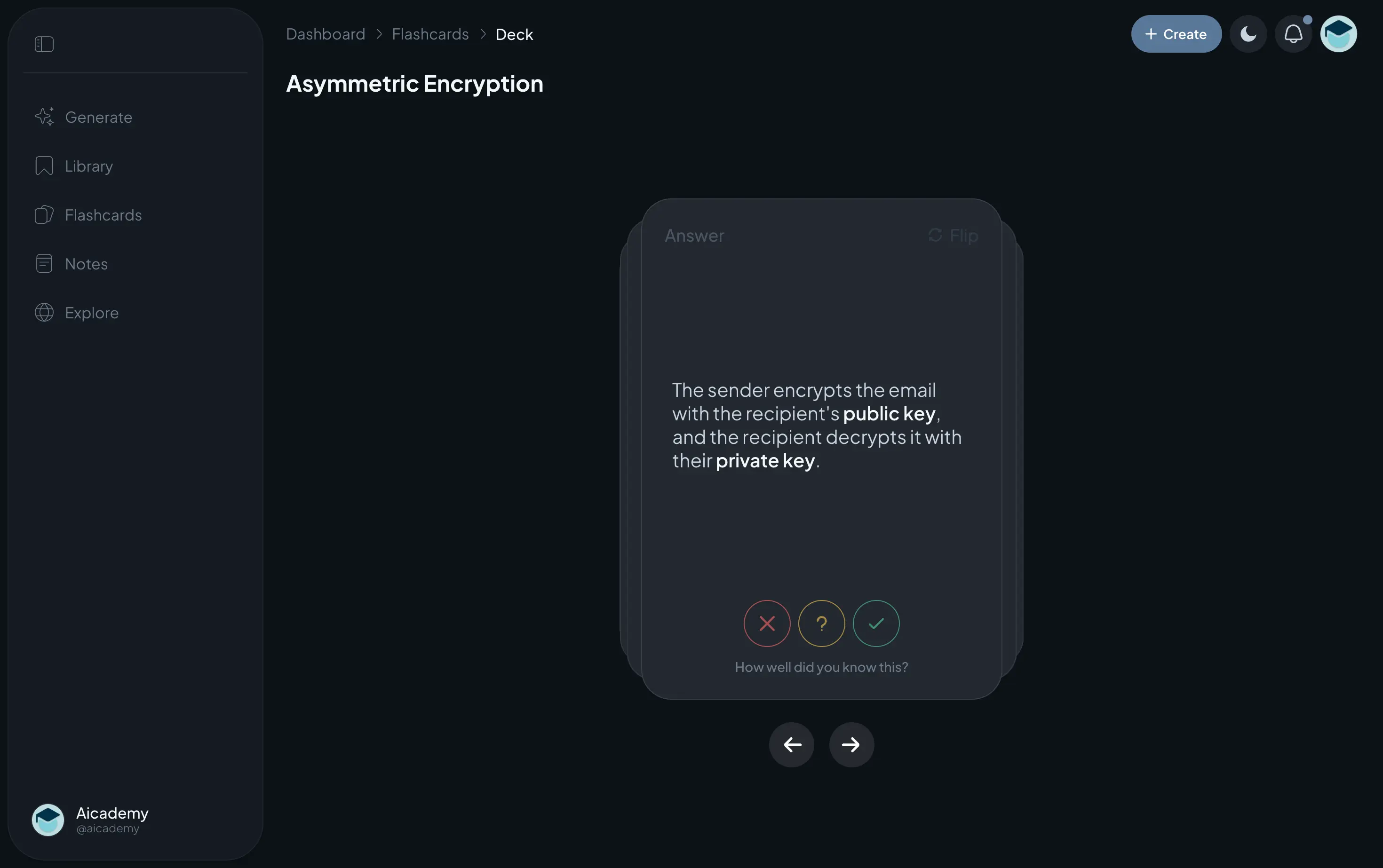
- Flashcards, where flipping the card is a genuine test — see our guide to making flashcards that work.
- The “explain it simply” test. If you cannot explain it to someone without notes, you do not know it yet.
- Turn your notes into questions instead of statements, then answer them from memory.
Spaced repetition: reviewing at the right time
Active recall tells you how to study; spaced repetition tells you when. Memory fades on a predictable curve — first mapped by Hermann Ebbinghaus in the 1880s, and replicated since — where a large chunk of what you learn slips away within days unless you revisit it.
The trick is to review each thing just as you are about to forget it, then leave a longer gap before the next review, and a longer one again. A fact you review today, in three days, then a week, then a month, ends up far more durable than the same fact reviewed four times in one evening. Spacing beats cramming for anything you need to keep beyond the next 24 hours.
Doing this by hand is fiddly — you would have to track when every fact is due. That is why spaced-repetition software exists: Anki is the best known, and Aicademy’s flashcards schedule each card for you based on how well you knew it, so the ones you find hard come back sooner and the ones you have mastered space out.
The two together: recall, on a schedule
Neither technique is new and neither is a secret — but used together they are close to a cheat code. Active recall makes each review count; spaced repetition makes sure those reviews land at the moments they do the most good. The combination — sometimes called spaced retrieval — is what turns short bursts of effort into knowledge that is still there weeks later.
Here is how the common methods stack up:
| Method | Feels like | Actually does |
|---|---|---|
| Re-reading | Familiar and productive | Builds recognition, not recall — fades within days. |
| Highlighting | Active and engaged | Marks the page; little effect on memory by itself. |
| Active recall | Harder, sometimes frustrating | The single most effective way to fix things in memory. |
| Spaced repetition | Slower than cramming | Far more durable — beats cramming for anything you need to keep. |
How to start this week
You do not need to rebuild your routine. Change two things — recall before you review, and spread those reviews out — and you have most of the benefit.
- Turn notes into questions. As you make notes, write a question beside each key point. Revision becomes answering them from memory.
- Test first, read second. Try to recall before you check. Even a failed attempt makes the correct answer stick better.
- Space your reviews. Revisit a topic a day or two after learning it, then leave growing gaps — rather than re-reading it back to back.
- Let a tool handle the scheduling. Flashcard apps with spaced repetition remove the admin, so you just review what is due.
- Be honest when you grade yourself. “Nearly” is wrong — mark it so it comes back sooner.
- Keep sessions short and frequent. Ten focused minutes of recall most days beats a three-hour re-reading marathon the night before.
None of this depends on a particular app — a pen, some questions and a calendar will do. But if you would rather not manage the scheduling yourself, Aicademy builds both techniques in: every lesson can become a quiz for active recall, and its flashcards handle spaced repetition automatically. You can try it free, or read our guide to revising with a method that actually works.
Frequently asked questions
Active recall is retrieving information from memory instead of re-reading it — testing yourself, answering a question before you look, or explaining a topic without your notes. Each successful retrieval strengthens the memory, which is why it is far more effective than reviewing notes you already have in front of you.
Spaced repetition is reviewing material at increasing intervals — a day or two later, then a week, then a few weeks — timed so you revisit each thing just before you would forget it. Spacing your reviews out like this produces far more durable memory than cramming everything into one session.
Re-reading builds familiarity, not recall. The text feels easy the second time, which fools you into thinking you know it — but recognising information on the page is a different skill from producing it in an exam. In large reviews of study techniques, re-reading and highlighting consistently score low for the time they take.
For almost everyone, yes. It takes more effort and feels less comfortable, but that effort is exactly what builds lasting memory. The research on the 'testing effect' — that retrieving something improves retention more than restudying it — is remarkably consistent.
A rough schedule is to review a day or two after first learning something, then after about a week, then a few weeks, extending the gap each time you recall it correctly. If you get something wrong, it should come back sooner. Spaced-repetition apps work these intervals out for you automatically.
Pick one topic, close your notes, and write down everything you can remember. Check what you missed, then repeat that a couple of days later, and again the following week. Recall before you review, spaced out over days — that single change is most of the benefit.
Sources
- Dunlosky et al. (2013), Improving Students' Learning With Effective Learning Techniques (SAGE)
- Roediger & Karpicke (2006), Test-Enhanced Learning (Psychological Science)
- Murre & Dros (2015), Replication and Analysis of Ebbinghaus' Forgetting Curve (PLOS ONE)
- The Learning Scientists — retrieval practice and spacing
Prices and features were checked as of the date shown and can change. Where a figure could not be confirmed from a primary source, we say so in the text.
GCSE & A-level tutor, Aicademy contributor
Liba is a first-class Computer Science graduate from the University of Birmingham who tutors GCSE and A-level students. She writes about revision technique and exam prep.
Disclosure: Aicademy is the study app made by the team that publishes this blog. We compare it fairly against other tools and cite our sources so you can check everything yourself.
Keep reading
How to make flashcards that actually work
Why most flashcards don't work, how to write ones that do, and how spaced repetition turns them into long-term memory.
How to revise for GCSEs: a method that actually works
Evidence-based GCSE revision: retrieval practice, spaced repetition and past papers, turned into a simple weekly plan that actually sticks.
How to revise for A-levels: a smarter method
How to revise for A-levels: evidence-based techniques applied to essays, problem subjects and exam technique, with a realistic independent-study plan.
Study with more than flashcards
Aicademy generates personalised lessons, quizzes and flashcards from any topic or your own notes, with spaced-repetition revision and an AI tutor.
Lessons on anything
Structured, level-matched lessons on any topic you study
Practice quizzes
Find out what you actually know before the exam does
Flashcard sets
Lock in key concepts with instant revision cards
Ask Aica
Stuck on something? Get a clear explanation, any time
Upgrade to Pro whenever you're ready