Track progress, take quizzes and save notes on this lesson.

Free forever · no card needed

Start free
Intermediate

Managing and Coping with Stress

4.3.7 Stress

Aligned to the AQA 7182 specification

Topic
Stress
Level
Intermediate
Reading time
9 min
Published
1 July 2026
On this page
  1. 1.Three Ways to Manage Stress
  2. 2.Drug Therapy: Benzodiazepines and Beta-Blockers
  3. 3.Stress Inoculation Therapy (SIT)
  4. 4.Biofeedback
  5. 5.Gender Differences in Coping with Stress
  6. 6.The Role of Social Support
  7. 7.Evaluation (AO3)
  8. 8.Common Exam Mistakes

Key takeaways

  • Drug therapies treat the symptoms of stress: benzodiazepines enhance GABA to reduce anxiety, while beta-blockers reduce the action of adrenaline and noradrenaline to lower heart rate and blood pressure.
  • Stress inoculation therapy (SIT) is a cognitive-behavioural technique with three phases in order: conceptualisation, skills acquisition, and application, building resilience before stress hits.
  • Biofeedback uses monitoring equipment and operant conditioning to teach a person to bring a physiological response, such as heart rate, under voluntary control.
  • Gender differences are tendencies, not rules: women more often use emotion-focused coping and seek social support (tend-and-befriend), while men more often use problem-focused coping or avoidance.
  • Social support buffers stress and comes in three types: instrumental (practical help), emotional (empathy and care), and esteem (encouragement that boosts self-belief).

Three Ways to Manage Stress

When the body's stress response is triggered too often or too strongly, it can harm health, so psychologists have developed methods to manage and cope with it. AQA requires three named methods, and they work in very different ways.

MethodType of approachWhat it targets
Drug therapyBiologicalThe body's physical response
Stress inoculation therapyCognitive-behaviouralThoughts and coping skills
BiofeedbackBehavioural (learning)Voluntary control of the body

The key contrast to hold onto is whether a method treats the symptoms of stress or the cause. Drug therapy and biofeedback act mainly on the physical symptoms, while stress inoculation therapy tackles the way a person thinks about and handles stressors in the first place. Keeping that distinction clear is what separates a top-band answer from a list of definitions.

Physiological approaches (drugs, biofeedback) treat how the body reacts. Psychological approaches (stress inoculation therapy) change how the person thinks and copes.

Drug Therapy: Benzodiazepines and Beta-Blockers

Drug therapy is a biological approach that reduces stress by acting directly on the body's chemistry. AQA names two types, and they work through completely different mechanisms.

Benzodiazepines (BZs) enhance the action of the neurotransmitter GABA. GABA is the body's natural form of anxiety relief: when it binds to neurons it reduces their activity, so the brain slows down. By boosting GABA's effect, BZs reduce overall neural activity and produce a calming, anti-anxiety effect.

Beta-blockers (BBs) work on the body rather than the brain. They reduce the action of adrenaline and noradrenaline on the heart and blood vessels. This lowers heart rate and blood pressure, directly reducing the physical symptoms of the stress response such as a racing heart and trembling.

DrugActs onMain effect
BenzodiazepinesGABA (neurotransmitter)Reduces anxiety; calming effect
Beta-blockersAdrenaline / noradrenalineLowers heart rate and blood pressure

Both drugs are fast-acting and require little effort from the patient, but they treat the symptoms of stress, not its underlying cause.

Stress Inoculation Therapy (SIT)

Stress inoculation therapy (SIT), developed by Meichenbaum, is a cognitive-behavioural technique. The idea is borrowed from medicine: just as a vaccine exposes you to a weak version of a disease so your body can build defences, SIT prepares a person to cope with stress before it becomes overwhelming. It works through three phases, which must be learned in the correct order.

PhaseWhat happens
1. ConceptualisationThe client identifies and understands their stressors and how they respond
2. Skills acquisitionThe client learns coping skills such as relaxation and positive self-talk
3. ApplicationThe client practises the new skills in increasingly stressful real situations

Because SIT changes how a person thinks about stressors and gives them practical coping skills, it tackles the cause rather than just the symptoms. The skills learned are also transferable, so they help the person handle future stressors long after therapy ends.

The order matters: conceptualisation → skills acquisition → application. Putting these phases out of sequence is a common exam error.

Biofeedback

Biofeedback teaches a person to bring a physiological stress response under voluntary control. The person is connected to equipment that monitors a bodily function, such as heart rate, blood pressure or muscle tension, and displays it back to them in real time as a sound or a signal on a screen.

Using this feedback, the person tries out relaxation techniques and can immediately see the effect. When they manage to slow their heart rate, the feedback confirms success, which acts as a reward. Through operant conditioning, they gradually learn which mental states reduce the response, until they can control it without the machine.
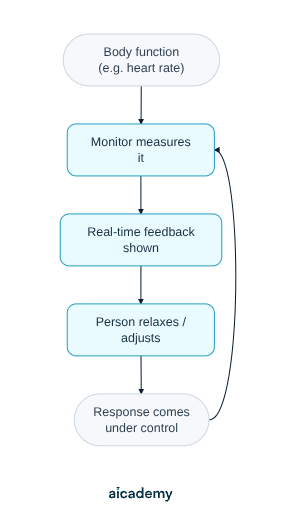
Biofeedback combines two ideas: relaxation to calm the body and operant conditioning (feedback as reward) to learn control.

Studying this for an exam?

Generate a personalised learning path for this subject. Free to get started.

Create a learning path

Gender Differences in Coping with Stress

Research suggests men and women tend to cope with stress in different ways, though these are general tendencies, not fixed rules — plenty of individuals do the opposite.

Women are more likely to use emotion-focused coping, which manages the feelings caused by a stressor, and to seek social support from others. This pattern is sometimes called the tend-and-befriend response and has been linked to the hormone oxytocin, which promotes nurturing and affiliative behaviour.

Men are more likely to use problem-focused coping, which tackles the stressor directly, or to rely on avoidance. This is sometimes connected to the traditional fight-or-flight framing of the stress response.

TendencyMore common inFocus
Emotion-focused copingWomenManaging the emotional reaction
Seeking social supportWomenTurning to others for help
Problem-focused copingMenActing on the stressor itself
AvoidanceMenWithdrawing from the stressor

Always frame gender differences as tendencies. Writing that "women use emotion-focused coping and men use problem-focused coping" as an absolute rule ignores wide individual variation and weakens an evaluation.

The Role of Social Support

Social support is help and comfort provided by other people, and it buffers the effects of stress: people with strong support networks tend to cope better and suffer fewer stress-related health problems. AQA requires three specific types.

Type of supportWhat it providesExample
Instrumental supportPractical help and resourcesLending money; helping with a task
Emotional supportEmpathy, care and reassuranceComforting a friend so they feel valued
Esteem supportEncouragement that boosts self-beliefTelling someone you know they can cope

The three are easy to confuse, so anchor each to its keyword: instrumental = practical, emotional = feelings, esteem = confidence. A single act can provide more than one type at once, but in the exam you should be able to define and give an example of each separately.

Social support does not remove the stressor. It changes how well the person is able to withstand it, which is why psychologists describe it as a buffer.

Evaluation (AO3)

To reach the top band, extended-answer questions need developed evaluation. Below are four points, each stating a strength and a limitation.

Drug therapy is effective and easy to use. Research shows benzodiazepines reduce anxiety more effectively than a placebo, and because drugs require almost no effort from the patient, they suit people who are too stressed to engage with talking therapies. However, they treat the symptoms and not the underlying cause, so the stressor remains, and BZs carry a risk of tolerance and dependence as well as side effects such as drowsiness.

SIT is effective and long-lasting. Because it tackles the cause and equips people with transferable coping skills, its benefits can continue long after therapy ends, unlike drugs. However, it is time-consuming, effortful and expensive, requiring sustained commitment from the client, so it does not suit everyone, particularly those who lack the time or motivation.

Biofeedback has no side effects and gives the person control. Unlike drugs, it carries no risk of dependence and puts the person in charge of managing their own response. However, the equipment makes it expensive and less accessible, and its benefits may come largely from the relaxation it teaches rather than the biofeedback itself, which questions whether the technology is necessary.

Social support has clear buffering evidence, but the picture is complex. Gender and cultural differences affect how support is sought and used, and the wrong kind of support, or too much of it, can actually undermine a person's coping by making them feel dependent or judged. Support therefore has to match the person's needs to be effective.

Common Exam Mistakes

1. Confusing benzodiazepines with beta-blockers

Benzodiazepines act on GABA to reduce anxiety; beta-blockers act on adrenaline and noradrenaline to lower heart rate and blood pressure. Swapping the mechanisms is one of the most common errors on this topic.

2. Getting the three phases of SIT out of order

The order is conceptualisation → skills acquisition → application. Describing application before skills acquisition, or omitting conceptualisation, loses marks even if the phases themselves are correct.

3. Treating gender differences as absolute rules

Women being more likely to seek social support and men to use problem-focused coping are tendencies, not laws. Stating them as fixed rules ignores individual variation and weakens evaluation.

4. Muddling the three types of social support

TypeKeywordExample
InstrumentalPracticalLending money
EmotionalFeelingsReassurance and empathy
EsteemConfidenceEncouraging self-belief

5. Saying biofeedback or drugs cure stress

None of these methods removes the source of stress. Drugs and biofeedback manage the physical symptoms, and social support buffers the impact. Only SIT works on the way a person appraises stressors, and even it does not eliminate them.

Key terms

Stress inoculation therapy
A cognitive-behavioural technique that builds resilience to stress in advance through three phases: conceptualisation, skills acquisition and application.
Biofeedback
A technique in which a person is given real-time information about a physiological function so they can learn, through operant conditioning and relaxation, to bring it under voluntary control.
Benzodiazepines
Anti-anxiety drugs that enhance the action of the neurotransmitter GABA, reducing neural activity to produce a calming effect.
Beta-blockers
Drugs that reduce the action of adrenaline and noradrenaline on the heart and body, lowering heart rate and blood pressure to treat the physical symptoms of stress.
Social support
Help and comfort provided by other people that buffers the negative effects of stress, taking instrumental, emotional and esteem forms.
Instrumental support
Practical help and resources given to a stressed person, such as lending money, offering transport or helping with a task.

Frequently asked questions

Benzodiazepines enhance the neurotransmitter GABA to reduce overall neural activity, producing a calming, anti-anxiety effect. Beta-blockers instead reduce the action of adrenaline and noradrenaline on the heart, lowering heart rate and blood pressure to target the physical symptoms of stress.

In order: conceptualisation (identifying and understanding the stressors), skills acquisition (learning coping skills such as relaxation and positive self-talk), and application (practising those skills in increasingly stressful real situations). Getting the order wrong loses marks.

Instrumental support is practical help and resources, such as lending money or helping with a task. Emotional support is empathy, care and reassurance that make a person feel valued. Esteem support is encouragement that boosts a person's self-belief and confidence to cope.

Generate revision on any topic you study

Type any topic you're studying and Aicademy generates a complete lesson, quiz, and flashcard set, personalised to your level.

Lessons on anything

Structured, level-matched lessons on any topic you study

Practice quizzes

Find out what you actually know before the exam does

Flashcard sets

Lock in key concepts with instant revision cards

Ask Aica

Stuck on something? Get a clear explanation, any time

Prev

Sources of Stress and Measuring Stress

Next

Neural, Hormonal and Genetic Explanations of Aggression

Related lessons

Top students don’t revise more. They revise what counts.

Start revising free

Free to start. No card needed.